
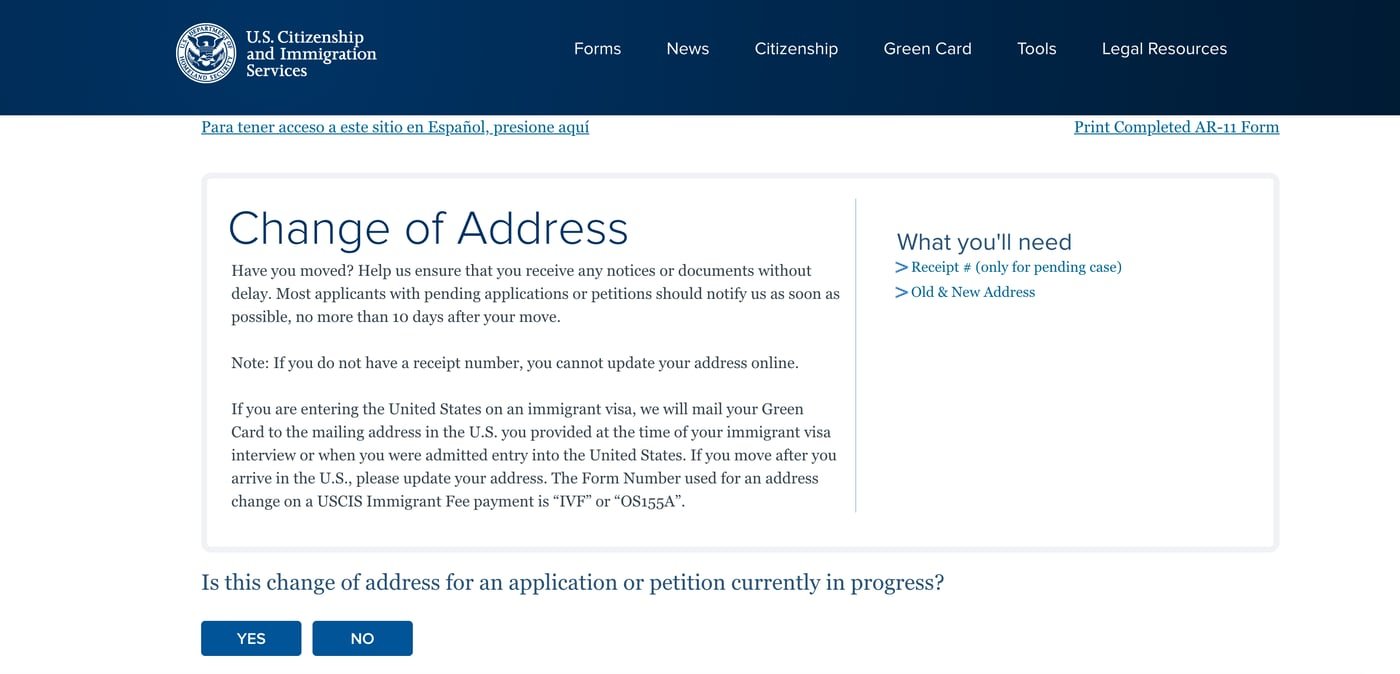
If you are a non-U.S. citizen living in the United States, reporting a change of address to U.S. immigration authorities is not optional—it is a legal requirement. Failing to update your address on time can result in serious immigration consequences, including fines, missed notices, delays in applications, or even removal proceedings in extreme cases.
Understanding how to report a change of address to U.S. immigration services correctly ensures that you remain compliant, receive critical correspondence, and protect your immigration status. This guide explains who must report, how to file, deadlines, special rules for different visa holders, and common mistakes to avoid, using official and up-to-date guidance.
Why Reporting a Change of Address Is Mandatory
U.S. immigration law requires most non-citizens to notify the government whenever they move. This obligation exists so immigration authorities can maintain accurate records and ensure lawful communication.
The requirement is enforced by U.S. Citizenship and Immigration Services, which operates under the Department of Homeland Security.
Official legal authority for this requirement comes from Section 265 of the Immigration and Nationality Act. USCIS guidance is available at:
https://www.uscis.gov/addresschange
Who Must Report a Change of Address?
You must report your new address if you are any of the following:
- Visa holder (F-1, H-1B, L-1, O-1, etc.)
- Green Card holder (lawful permanent resident)
- Asylum applicant or refugee
- Adjustment of Status applicant
- TPS or DACA recipient
- Conditional permanent resident
- Immigrant or nonimmigrant visa holder
Who Is Exempt?
Only a very limited group is exempt, including:
- A-visa diplomats
- G-visa representatives of international organizations
All others must comply.
Deadline for Reporting a Change of Address
You must report your new address within 10 days of moving.
Missing this deadline may result in:
- Civil penalties
- Missed biometrics or interview notices
- Delayed or denied applications
- Potential immigration violations
The Main Form: USCIS Form AR-11
The official method for reporting a change of address is Form AR-11 (Alien’s Change of Address Card).
You can file it in two ways:
- Online (recommended)
- By mail (paper form)
USCIS strongly encourages online filing because it is faster and provides confirmation.
How to Report a Change of Address Online (Step-by-Step)
Step 1: Visit the USCIS Address Change Page
Official portal:
https://www.uscis.gov/addresschange
Step 2: Log In or Continue as a Guest
- If you have a USCIS online account, log in
- If not, you can submit as a guest (account still recommended)
Step 3: Complete Form AR-11 Electronically
You will provide:
- Full legal name
- Date of birth
- Alien Registration Number (A-Number), if applicable
- Old address
- New address
- Immigration status
Step 4: Update Pending Applications Separately
Important: Filing AR-11 alone does not automatically update the address on pending cases.
You must manually update each pending application or petition (such as I-485, I-765, I-130).
USCIS explains this clearly at:
https://www.uscis.gov/addresschange
Step 5: Save Your Confirmation
After submission, USCIS provides a confirmation page. Save or print this for your records.
How to Report a Change of Address by Mail
If you cannot file online, you may submit a paper AR-11.
Form download:
https://www.uscis.gov/ar-11
Mail it to the address listed on the form instructions. However, mail processing is slower and carries higher risk of delay.
Special Rules for Green Card Holders
If you are a lawful permanent resident, reporting a change of address is mandatory, even if:
- Your Green Card is expired
- You are outside the U.S. temporarily
- You plan to move again soon
Failure to comply can affect future naturalization or immigration benefits.
Permanent resident obligations are outlined at:
https://www.uscis.gov/green-card/after-we-receive-your-green-card
Address Changes for Pending Immigration Cases
If you have applications pending, you must update:
- USCIS records via AR-11
- Each pending form individually
- Your attorney or accredited representative (if applicable)
Failure to do so may result in missed RFEs (Requests for Evidence), interview notices, or decisions sent to the wrong address.
Address Changes for Immigration Court Cases
If your case is before an immigration court, USCIS is not enough.
You must also notify:
- Executive Office for Immigration Review
You must file:
- Form EOIR-33
EOIR address change guidance:
https://www.justice.gov/eoir
What Happens If You Do Not Report Your Address?
Failure to report a change of address can lead to:
- Monetary fines
- Missed hearings (leading to removal orders)
- Application denials
- Allegations of non-compliance
- Problems with future visa or Green Card applications
In removal proceedings, failure to update your address is one of the most common causes of in-absentia deportation orders.
Common Mistakes to Avoid
Many applicants unintentionally make errors, including:
- Assuming USPS address forwarding updates USCIS (it does not)
- Updating only one pending application
- Missing the 10-day deadline
- Entering inconsistent address formats
- Forgetting to update dependents’ records
Each family member must update their address separately.
Best Practices for Staying Compliant
To avoid issues:
- Report address changes immediately after moving
- Use the USCIS online system whenever possible
- Keep confirmation receipts
- Track all pending case numbers
- Update your attorney and employer (if visa-based)
Reliable legal guidance can also be found through organizations such as the American Immigration Lawyers Association at
https://www.aila.org
Frequently Asked Questions
Does reporting to USPS count?
No. USPS address forwarding does not update USCIS or DHS records.
Do dependents need to file separately?
Yes. Each non-citizen must file their own AR-11.
Can I report a change of address while outside the U.S.?
Yes, if you remain subject to U.S. immigration jurisdiction and have pending matters.
Conclusion: Protect Your Status by Updating Your Address
Reporting a change of address to U.S. immigration services is a simple but legally critical responsibility. Whether you are a visa holder, Green Card holder, asylum applicant, or adjustment applicant, timely compliance protects your rights, prevents missed notices, and safeguards your immigration future.
By filing Form AR-11 within 10 days, updating all pending cases, and keeping proper records, you ensure full compliance with U.S. immigration law.
For official instructions and updates, always rely on:
https://www.uscis.gov/addresschange