
Introduction
Driving across Europe is one of the great pleasures of the modern traveler from the winding roads of the Italian Riviera to the scenic highways of the French countryside. But even the most careful drivers can face unexpected challenges. A car accident abroad, no matter how minor, can quickly turn a dream road trip into a stressful ordeal.
For residents, tourists, and expatriates alike, understanding how to claim car insurance in Europe after an accident abroad is essential. Every European country operates under its own laws, but the European Union has established common systems to simplify the claims process.
Whether you’re driving your own car across borders or renting a vehicle in another EU country, knowing how to handle an accident and file a claim efficiently can save time, money, and frustration.
This article offers a complete guide to claiming car insurance after an accident abroad in Europe covering legal requirements, essential steps, insurance documents, and how cross-border claims work under EU law.
Understanding Cross-Border Car Insurance in Europe
Before diving into the claims process, it’s important to understand how car insurance works across European borders.
Most European drivers are covered under the Green Card System, which allows vehicles insured in one participating country to travel legally in another without buying additional insurance.
The Council of Bureaux, which manages the Green Card System, includes all EU and EEA countries, plus several non-EU states such as the UK, Switzerland, and Turkey.
This means that:
- If you hold valid car insurance from an EU country, it automatically provides minimum third-party liability coverage in other participating states.
- If you drive outside the Green Card area, you may need frontier insurance to remain legally covered.
Your insurance certificate (often with a green border) proves that your vehicle is insured and recognized internationally, a crucial document if you’re involved in an accident abroad.
Step 1: Ensure Safety and Seek Immediate Help
After any accident abroad, safety comes first.
- Stop your vehicle and check for injuries.
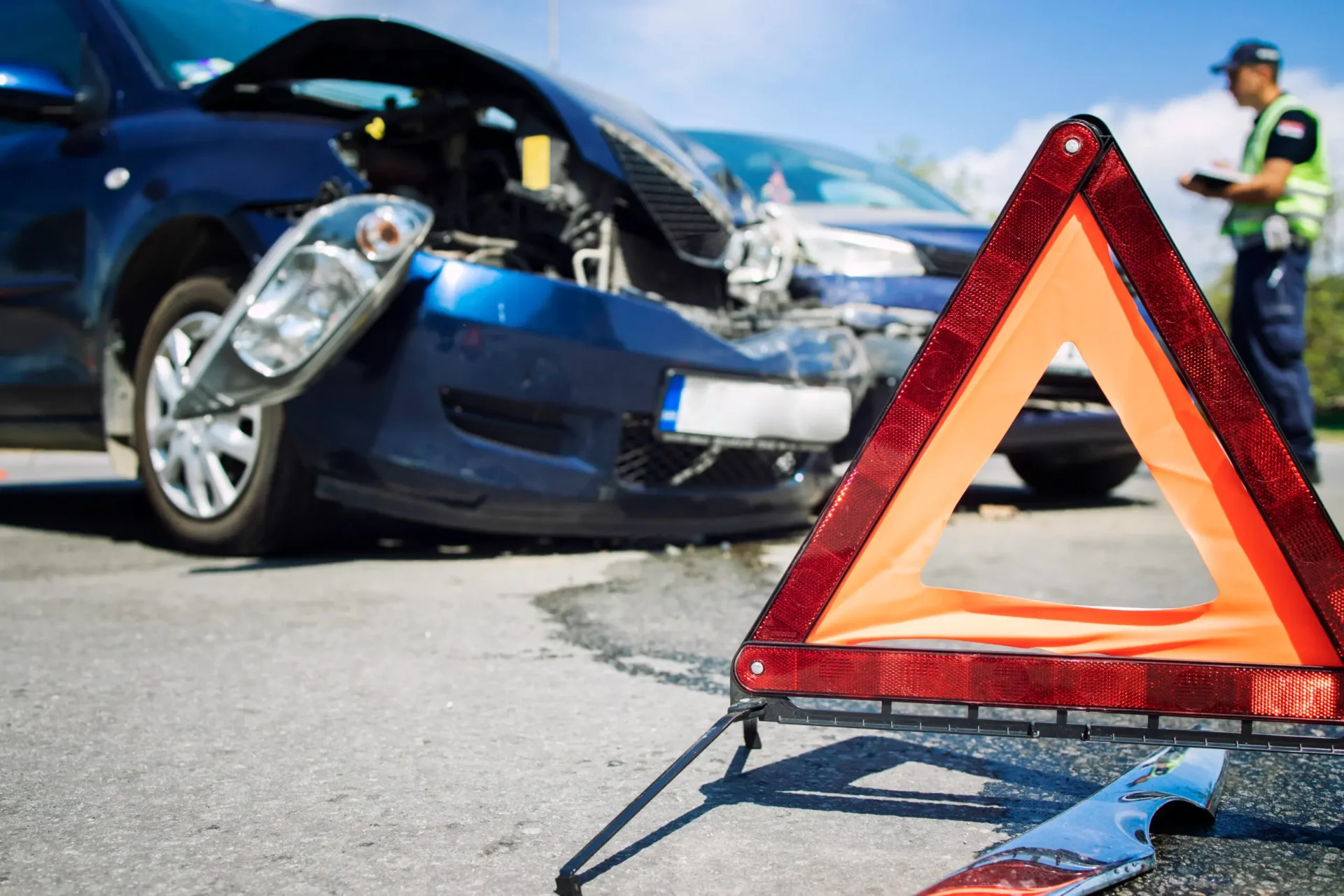
- Turn on your hazard lights and set up a warning triangle (a legal requirement in most European countries).
- Call the local emergency number — 112, which works across all EU member states.
- If necessary, contact police or medical services immediately.
Even if the accident seems minor, it’s always advisable to report it to the local police. An official police report provides valuable documentation for your insurance claim and may be required by your insurer or local authorities.
If you’re in a rental car, notify the rental company right away and follow their specific reporting procedures.
Step 2: Exchange Details with All Parties Involved
Once it’s safe, gather all the essential information from everyone involved in the accident. This will make the insurance claim process much smoother later.
Exchange:
- Full names, addresses, and contact details of all drivers involved
- Vehicle registration numbers and insurance policy numbers
- Insurer names and Green Card details (if available)
- Contact information for any witnesses
You should also take photos of:
- The vehicles, license plates, and visible damages
- The accident scene from different angles
- Street signs, road conditions, or traffic signals that may help establish fault
In multilingual environments, the European Accident Statement (EAS) is particularly useful. This standardized bilingual form is recognized across Europe and allows both parties to record accident details clearly even if they speak different languages.
Both drivers should sign the EAS form, and each should keep a copy for their insurance company.
Step 3: Contact Your Insurance Company Immediately
After you’ve ensured everyone’s safety and collected details, contact your insurer as soon as possible ideally within 24 hours.
Provide them with:
- The date, time, and location of the accident
- The other driver’s details and insurance information
- Photos and copies of the police report or accident statement
- A brief description of how the accident occurred
Most insurers have 24-hour international hotlines for claims assistance. If you purchased European breakdown or travel insurance, those services might also help coordinate towing, translation, or local repairs.
If your insurer requires that you file an official claim within a specific timeframe (e.g., within 7 days), make sure you comply to avoid delays or rejection.
Step 4: Determine Where to File Your Claim
One of the most confusing parts of an accident abroad is figuring out where to file your insurance claim.
Here’s a breakdown of your options:
Option 1: Claim Directly with Your Insurer
If the accident was not your fault, your insurer may handle the claim on your behalf under EU law and then recover costs from the foreign insurer.
If you were at fault, you must report the claim to your insurer so they can compensate the other party.
Option 2: File a Claim with the Other Driver’s Insurer
If you’re a victim of a road accident caused by a driver from another EU or EEA country, you can claim directly from their insurance company.
Under the EU Motor Insurance Directive, each EU insurer must have a representative (claims handler) in every member state.
You can:
- File your claim through the local representative of the foreign insurer in your home country, or
- Contact the foreign insurer directly if you’re comfortable handling the process yourself.
Option 3: File Through the Green Card System
If you can’t identify the insurer or the other driver’s vehicle was uninsured, the Green Card compensation body in the country where the accident occurred can handle your claim.
Each European country has a national compensation bureau, coordinated by the Council of Bureaux.
Step 5: Notify the Police and Obtain an Official Report
In many European countries, including France, Germany, and Italy, you are required by law to file a police report for any accident involving injury, property damage, or disputed liability.
The police report serves as official evidence for your insurance claim.
Be sure to:
- Request a copy of the report or at least note the report reference number.
- If possible, obtain an English translation or summary.
Having a police report can also help if you later need to prove non-fault status, especially in cases of disputes or international claims recovery.
Step 6: File the Claim with All Supporting Documents
Once you’ve returned home or contacted your insurer, submit your claim with all the required documents.
A complete claim file should include:
- Accident details and European Accident Statement (EAS)
- Police report (if applicable)
- Photos and witness statements
- Copies of driving licenses and vehicle registration certificates
- Repair invoices or cost estimates
- Proof of insurance and Green Card copy
Most insurers allow you to upload these documents digitally through their online claims portals.
Your insurer will then contact the other party’s insurer or the relevant compensation bureau to process your claim.
Step 7: Handling Rental Car Insurance Claims
If you were driving a rental car abroad, the process depends on the type of insurance you purchased when renting the vehicle.
Most car rentals in Europe include basic third-party liability insurance by law. However, if you purchased Collision Damage Waiver (CDW) or Super CDW, this will determine whether you’re responsible for repair costs.
Steps to follow:
- Notify the rental company immediately after the accident.
- Complete their accident report form (often provided in the glove box).
- Provide the police report and photos of the damage.
- Do not authorize repairs unless approved by the rental agency.
If you purchased travel insurance that includes rental car coverage, contact your insurer as well — they may reimburse the deductible or damage costs.
Step 8: Claiming Compensation from Uninsured or Unknown Drivers
If you’re hit by an uninsured or unidentified vehicle while driving in Europe, you are still protected under EU law.
Every EU country has a guarantee fund or compensation body that covers damages caused by uninsured or unknown drivers.
For example:
- In France, it’s handled by the Fonds de Garantie des Assurances Obligatoires de Dommages (FGAO).
- In Germany, it’s the Verkehrsopferhilfe e.V..
- In Italy, the Fondo di Garanzia per le Vittime della Strada provides coverage.
If the accident occurs abroad but involves an EU-registered vehicle, you can claim through your home country’s equivalent organization.
The European Commission’s Motor Insurance page provides updated contact details for each country’s national body.
Step 9: Dealing with Language and Legal Barriers
Language differences can make the claims process challenging, especially if you’re filing in another country.
To simplify communication:
- Use the bilingual European Accident Statement, it’s accepted across borders.
- Ask for an English translation of official documents such as police reports or repair estimates.
- If needed, contact your consulate or embassy in the country where the accident occurred for translation or legal assistance.
For complex claims or disputes, you may also hire a local lawyer or insurance claims specialist who understands cross-border accident law. Many European insurers provide legal assistance coverage as part of their policies.
Step 10: Timeframes and Compensation
Insurance claim timeframes vary depending on the country and the complexity of the accident.
Under EU law, insurers are generally required to respond to claims within three months of receiving all necessary documents.
If your claim remains unresolved or disputed, you can contact your country’s information center or compensation body, which can intervene to ensure compliance.
Compensation may include:
- Vehicle repair or replacement costs
- Medical expenses (if injured)
- Loss of income
- Legal costs or travel disruption
Keep copies of all expenses and correspondence to support your reimbursement claim.
Cross-Border Claims and the Role of the Green Card System
The Green Card System, established in 1953, remains the cornerstone of cross-border car insurance in Europe.
It ensures that:
- Victims of accidents caused by foreign vehicles receive compensation as if the accident occurred in their home country.
- Insurers can communicate through recognized national bureaus and claims representatives.
- Drivers are protected from having to buy new insurance each time they cross a border.
If the accident involves a driver from outside the EU (for example, from Turkey or Ukraine), you can still claim under the Green Card rules, as long as both countries are members of the Council of Bureaux network.
Practical Tips for Smooth Claims Abroad
To avoid complications and ensure a smooth insurance process when driving across Europe:
- Always carry your Green Card insurance certificate and vehicle registration papers.
- Keep a printed copy of the European Accident Statement in your glove compartment.
- Save your insurer’s international emergency phone number on your phone.
- Consider adding travel insurance or breakdown assistance for extra coverage abroad.
- Review your policy before traveling to confirm cross-border validity and coverage limits.
These precautions can make a significant difference if an accident occurs, especially when dealing with different languages, laws, and insurers.
Post-Brexit Considerations for UK Drivers in Europe
Although the UK is no longer part of the EU, UK drivers visiting Europe are still covered under the Green Card System.
However, you must:
- Carry a printed Green Card when driving in EU or EEA countries.
- Ensure your insurance covers driving in Europe (check your policy terms).
- Be prepared for slightly longer claims processing due to new administrative requirements.
You can find updated guidance for UK motorists on the UK Government’s travel and driving abroad page.
Conclusion
Getting into a car accident abroad can be a daunting experience, but knowing how to handle it and file an insurance claim correctly can prevent a stressful situation from becoming a financial disaster.
Europe’s harmonized systems, such as the Green Card network and the EU Motor Insurance Directive exist to protect drivers across borders, ensuring fair treatment and compensation regardless of where an accident occurs.
By following the right steps; ensuring safety, collecting evidence, notifying authorities, and contacting your insurer promptly, you can navigate the process confidently and efficiently.
The key takeaway? Preparation and understanding your insurance coverage are your best allies on the road. Whether you’re exploring France, Germany, or Spain, having the right knowledge ensures that a bump on your European journey doesn’t derail the adventure entirely.